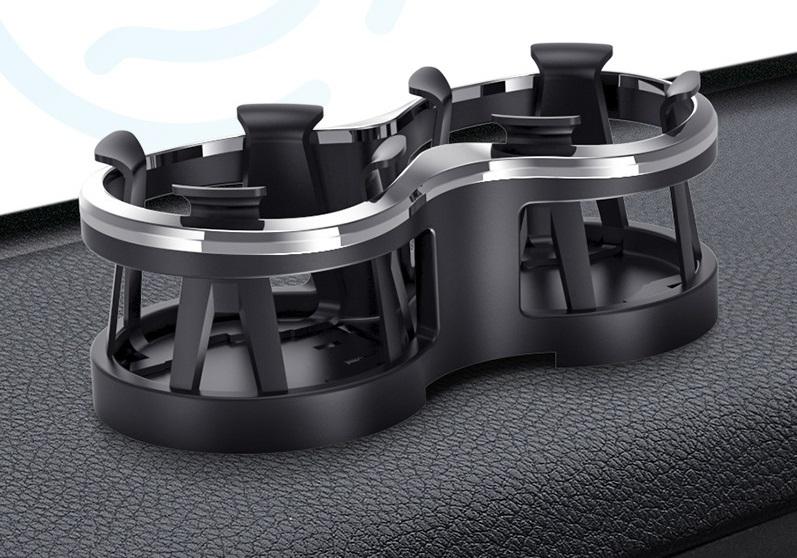
When manufacturing mechanical equipment, automotive accessories, and precision structural components, countless factories keep encountering frequent dimensional deviations, short service life, surface defects, and assembly mismatch problems. Most operators only focus on surface quality and immediate delivery speed, yet they overlook the core material and molding process flaws that cause long-term equipment failures. Choosing qualified aluminum alloy die casting components can fundamentally eliminate these hidden troubles, stabilize batch consistency, and reduce overall operating and maintenance costs in the entire production chain.
Poor die casting raw material matching directly leads to internal porosity, air holes, and stress concentration inside finished parts. These invisible defects cannot be detected by simple visual inspection, but they gradually cause cracking, deformation, and leakage under high temperature, high pressure, and frequent vibration working conditions. Professional customized die casting solutions from professional aluminum casting manufacturer adopt standardized alloy ratio, vacuum die casting process, and strict internal defect testing to ensure dense internal structure and stable mechanical performance under complex working environments.
Many buyers mistakenly believe all aluminum die casting products have identical corrosion resistance, pressure resistance, and wear resistance. In actual industrial applications, ordinary die cast aluminum parts cannot adapt to outdoor humidity, automobile engine temperature changes, hydraulic system high pressure, and frequent mechanical friction. Unreasonable wall thickness design, incomplete deburring treatment, and inaccurate tolerance control will further amplify safety risks and increase after-sales replacement frequency, bringing unnecessary economic losses to continuous mass production.
Long-term unstable batch quality is another common hidden problem plaguing downstream assembly enterprises. Irregular size errors between different batches cause difficult assembly, loose fitting, reduced overall precision of finished machinery, and shortened service cycle of complete machines. Reliable die casting production follows unified mold standards, full-process dimensional inspection, and standardized cooling and shaping procedures, ensuring each product maintains highly consistent parameters from small-batch trial production to large-scale mass customization.
Environmental adaptability and load-bearing durability also determine whether die casting parts can adapt to harsh industrial scenarios. Low-density aluminum alloy has natural lightweight advantages, but unqualified casting processes sacrifice structural strength, making parts easy to deform under heavy load and aging rapidly under ultraviolet and corrosive gas environments. Scientific alloy formulation and optimized die casting molding effectively balance light weight, high rigidity, impact resistance, and weather resistance, meeting long-term stable operation requirements of automotive, intelligent machinery, electromechanical equipment, and aerospace auxiliary structures.
Key Performance Comparison of Conventional & Premium Aluminum Alloy Die Casting Parts
| Performance Index | Ordinary Die Casting Parts | High-Precision Custom Die Casting Parts | Practical Application Impact |
|---|---|---|---|
| Internal Density | High porosity, loose structure | Ultra-dense structure, no hidden pores | Avoid oil leakage, air leakage and fracture failure |
| Dimensional Tolerance | ±0.15mm~±0.3mm | ±0.02mm~±0.08mm | Smooth assembly, no gap mismatch or tight fitting |
| High Temperature Resistance | Below 180°C stable operation | Stable below 280°C | Suitable for engine, power system and thermal equipment |
| Corrosion Resistance | Poor, easy oxidation outdoors | Strong anti-rust and anti-corrosion performance | Adapt to wet, chemical and outdoor harsh environments |
| Batch Consistency | Large difference between batches | Almost identical parameter stability | Guarantee uninterrupted automated assembly line production |
Internal hidden defects are the most easily ignored fatal problems of die casting products. Porosity, shrinkage cavities and micro-cracks inside parts will expand rapidly after long-term mechanical operation, resulting in sudden breakage, sealing failure and equipment shutdown accidents. Non-destructive flaw detection, pressure leakage testing and hardness testing are essential links for qualified precision aluminum die casting, which ordinary small workshops cannot complete systematically. Only standardized production enterprises can provide complete quality inspection reports to match safety-grade mechanical use standards.
Assembly matching efficiency directly affects enterprise production capacity and cost control. Irregular edge burrs, uneven surface flatness and non-standard hole position accuracy will greatly prolong manual trimming and debugging time. Precision die casting parts undergo finish machining, surface polishing, shot blasting and anodizing treatment, achieving smooth surface, accurate hole position and direct plug-and-play assembly, which greatly improves production efficiency of automated assembly lines and reduces labor processing costs.
Material lightweight and structural strength are mutually restrictive in traditional casting technology. Many low-cost products reduce material cost blindly, resulting in insufficient tensile strength and bending resistance. Professional aluminum alloy die casting optimizes wall thickness distribution scientifically, adopts high-strength aluminum alloy formula, realizes lightweight structure while meeting extreme load-bearing requirements, effectively reduces overall equipment weight, lowers energy consumption and improves operation flexibility of mechanical equipment.
Surface treatment quality determines the appearance grade and service life of finished products. Simple paint spraying falls off easily, rusts quickly and has poor wear resistance. Anodizing, electrophoresis, powder spraying and other multi-standard surface treatment processes form a firm protective film on the part surface, resisting wear, oxidation and chemical erosion, maintaining stable appearance and performance for many years in continuous use scenarios.
In summary, selecting suitable precision aluminum alloy die casting parts is not only a purchase choice of accessories, but also a key decision affecting production safety, batch stability, maintenance cost and enterprise long-term benefit. By focusing on material quality, molding process, precision control and hidden defect detection, enterprises can avoid frequent failures caused by inferior products, stabilize product quality, and gain stronger competitiveness in fierce industrial market competition.